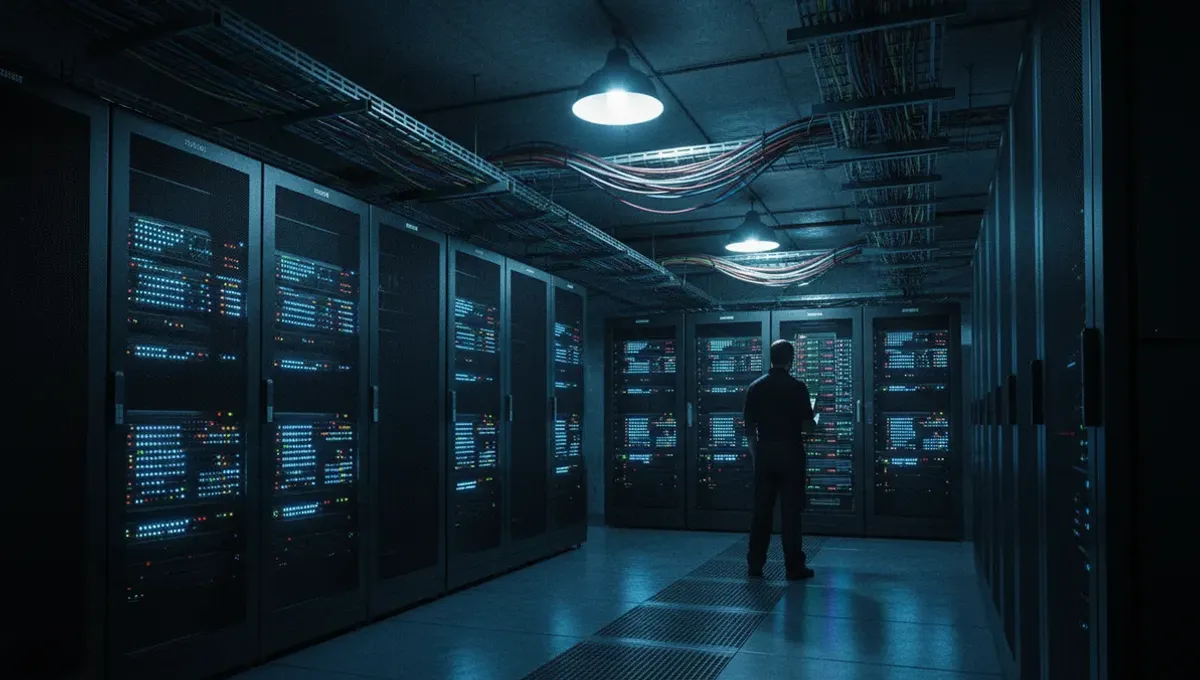
What Dark Markets Are and How They Function
Dark markets are online platforms built on encrypted networks like Tor that facilitate the sale of goods and services, many of them illegal. They operate using cryptocurrency for payment and employ escrow systems to reduce fraud between buyer and seller. Unlike surface web marketplaces, they are designed to obscure the identity and location of participants.
These markets typically require users to navigate through multiple layers of authentication, PGP encryption, and vendor reputation systems. The anonymity they provide attracts both legitimate privacy advocates and those engaged in criminal activity. Vendors establish trust through transaction history and user reviews, much like conventional e-commerce, but with no legal recourse if disputes arise.
Slovenia's position in Central Europe makes it a transit point for goods moving between the Balkans and Western Europe. Dark markets have historically served as coordination platforms for this trade, though the specific volume and nature of Slovenian darknet commerce remains difficult to quantify without access to law enforcement data.
Regional Context: Dark Markets Across the Balkans
The Balkans region, including Slovenia, Albania, and other neighboring countries, has become a significant hub for darknet activity. Dark markets in Albania have been documented as major distribution points for narcotics and synthetic drugs destined for Western Europe. Similar patterns appear in dark markets in Bosnia, dark markets in Romania, and dark markets in Serbia, where organized crime groups use encrypted platforms to coordinate supply chains.
Slovenia's smaller population and more developed infrastructure mean its darknet ecosystem differs from larger regional neighbors. However, it remains integrated into cross-border criminal networks that exploit the region's geographic position and porous internal borders within the European Union.
Comparable activity has been observed in dark markets in Austria, dark markets in Hungary, and dark markets in the Czech Republic, where similar transit routes and organized crime structures operate. Understanding these regional patterns helps explain why individual country-level markets rarely operate in isolation; they are nodes in a larger network.
How Darknet Markets Operate: Technical and Organizational Structure
Darknet markets operate as decentralized or semi-centralized platforms, each with distinct governance models. Some use a marketplace model where vendors rent storefronts and the platform operator takes a commission. Others function as forums where users post offers and negotiate privately. Most employ multi-signature escrow, meaning the platform operator, buyer, and seller must all agree before funds are released.
Operators typically remain anonymous and operate from jurisdictions with weak extradition treaties or sympathetic law enforcement. They generate revenue through transaction fees, vendor commissions, and sometimes by stealing deposits during exit scams. The technical infrastructure relies on Tor hidden services, which provide location anonymity but do not guarantee security against determined law enforcement investigation.
Vendors establish reputation through transaction history and customer feedback. This creates a perverse incentive structure where reliability in fulfilling illegal orders becomes a marketable asset. The absence of legal recourse means disputes are resolved through platform mediation or, in some cases, violence.
Law Enforcement Actions and Market Disruptions
European law enforcement agencies, including those in Slovenia, have conducted coordinated operations against darknet markets and the criminal networks they serve. These operations typically target major platforms and high-volume vendors rather than individual users. Seizures of market infrastructure, arrests of operators, and asset forfeiture have disrupted operations repeatedly over the past decade.
The Slovenian police and Europol have participated in multinational investigations targeting trafficking networks that use darknet platforms for coordination. These efforts have resulted in the shutdown of several markets and the arrest of operators and major vendors. However, the decentralized nature of darknet infrastructure means that market disruption often leads to migration rather than elimination.
Law enforcement has also developed techniques for tracing cryptocurrency transactions and identifying users through operational security failures. Many arrested darknet operators were caught not through sophisticated hacking but through conventional investigative work: following money trails, analyzing metadata, and exploiting mistakes in anonymization practices.
Reality Layer: How Darknet Markets Actually Behave
Darknet markets are inherently unstable and prone to failure. According to Tor Project documentation and security-vendor incident reports, the median lifespan of a major darknet market is between two and four years before seizure, exit scam, or technical collapse. This matters because users who believe they are accessing a stable platform may actually be interacting with an operation days away from disappearing with their funds.
Phishing and market clones are endemic. Scammers create fake versions of popular markets using similar names and interfaces, stealing credentials and deposits from users who mistype addresses or fail to verify PGP signatures. Court records and law enforcement press releases show that a significant portion of reported darknet fraud involves users losing money to clones rather than to the legitimate market operator.
Operational security failures are the primary reason darknet operators are caught. Academic research on onion services and public law enforcement press releases document cases where operators were identified through metadata leaks, cryptocurrency analysis, or simple mistakes like reusing usernames across platforms. This matters to ordinary users because it means that even if a market appears secure, the operator's eventual arrest could expose user data.
The ecosystem is also rife with scams targeting vendors and buyers. Exit scams, where market operators steal all deposits and disappear, have cost users millions. Vendor impersonation, where scammers create accounts mimicking established sellers, is routine. This instability means that trust in any single market is misplaced.
Risks and Misconceptions About Darknet Participation
A common misconception is that using Tor alone provides complete anonymity. It does not. Tor protects your IP address and location from the website you visit, but it does not protect you from law enforcement if you engage in illegal activity. Users have been identified and prosecuted despite using Tor because they made operational security mistakes: reusing usernames, failing to use PGP encryption, or leaving traces in their cryptocurrency transactions.
Another misconception is that darknet markets are safer than street-level drug markets. They are not. Buyers have no recourse if they receive counterfeit products, and sellers face the risk of law enforcement infiltration and arrest. The anonymity cuts both ways: it protects criminals from identification, but it also means that scammers and undercover agents operate freely.
Participation in darknet markets carries legal risk even for users who believe they are acting within the law. Purchasing controlled substances, even in jurisdictions where they are decriminalized, may violate federal law. Accessing certain markets or forums can trigger law enforcement investigation. The legal landscape varies significantly by jurisdiction, and users in Slovenia face different legal consequences than those in Argentina or Australia, but all face some degree of risk.
Verification, Safety, and Moving Forward
If you are researching darknet markets for security awareness, journalism, or academic purposes, verification is critical. Do not rely on search results or forum posts to identify legitimate market addresses. Instead, consult the official resources page of this site and look for PGP-signed announcements from known security researchers or law enforcement agencies.
For ordinary internet users, the safest approach is to avoid darknet markets entirely. If you are concerned about privacy or security, there are legal alternatives: use a reputable VPN service, enable two-factor authentication on your accounts, and encrypt sensitive communications using tools like Signal or PGP.
If you have been exposed to darknet market fraud or believe you have been targeted by scammers, report it to your local law enforcement agency and to organizations like the Internet Crime Complaint Center. Document all communications and transactions. This information helps authorities identify patterns and disrupt criminal networks.
The core takeaway is that darknet markets are unstable, frequently compromised, and rife with scams. Their apparent anonymity is illusory, and participation carries real legal and financial risk. Understanding how they operate is valuable for security awareness, but engaging with them directly is not necessary for most people and exposes you to significant harm.
Common Questions
Are dark markets in Slovenia still operating?
The status of specific darknet markets changes frequently due to law enforcement action, exit scams, and technical failures. Rather than naming active markets, which may be offline by the time you read this, consult the resources page of this site for current information verified through PGP-signed announcements and law enforcement press releases.
How do people access dark markets?
Dark markets are accessed through the Tor browser, which routes traffic through multiple encrypted relays to obscure the user's IP address and location. Users navigate to .onion addresses, which are hidden services hosted on the Tor network. However, accessing Tor alone does not guarantee anonymity or legal protection if you engage in illegal activity.
What is the difference between dark markets in Slovenia and other European countries?
Slovenia's smaller population and geographic position in Central Europe mean its darknet ecosystem is integrated into broader Balkan and European trafficking networks rather than operating independently. Law enforcement coordination across the EU also means that investigations often span multiple countries simultaneously.
Can I be caught using a darknet market?
Yes. Law enforcement has successfully identified and prosecuted darknet market users through cryptocurrency analysis, metadata leaks, operational security failures, and undercover operations. Using Tor protects your IP address but does not protect you from investigation if you engage in illegal activity or make mistakes in anonymization practices.
What should I do if I lost money to a darknet market scam?
Report the fraud to your local law enforcement agency and to the Internet Crime Complaint Center. Document all communications, transaction IDs, and cryptocurrency addresses involved. This information helps authorities identify patterns and disrupt criminal networks, even if recovery of your funds is unlikely.